
Innovation in local government is changing how cities, counties, and municipalities deliver public services by using modern technology, better processes, data-driven decisions, and new approaches to community engagement. From AI-powered citizen support to digital permitting and online service portals, local governments across the United States are exploring practical ways to make public services faster, more accessible, and more efficient.
However, successful local government innovation involves more than introducing new software. Municipal leaders must address aging technology infrastructure, limited budgets, workforce readiness, cybersecurity risks, and growing expectations for convenient digital services.
For cities and counties planning digital transformation, understanding the essential elements of innovation is the first step toward building a sustainable strategy. This article explores six key elements of innovation in local government, highlights real examples from U.S. municipalities, and provides practical ideas and implementation steps for improving government operations and resident experiences.
What Are the Six Key Elements of Innovation in Local Government?
The six essential elements of local government innovation are strategic leadership, modern digital infrastructure, responsible use of AI and data, accessible digital services, workforce development, and cybersecurity. Together, these elements help municipalities modernize outdated processes, improve service delivery, manage public resources, and build stronger relationships with residents.
While every city and county has different priorities, successful innovation requires a coordinated approach that connects technology investments with measurable community needs.
1. Leadership, Strategy, and a Culture of Experimentation
Technology does not innovate. Organizations do. Lasting innovation needs leaders who set priorities and give staff permission to test, learn, and sometimes fail. An OECD survey of cities found that just under half (49%) have a formal innovation strategy. Cities that have one are more experienced with innovation activities.
Kansas City shows how this works. Former innovation-team leaders now work as city manager and assistant city manager, spreading a spirit of experimentation across agencies.
What to do:
- Name one executive sponsor for innovation.
- Publish two or three clear innovation goals.
- Run small pilots with a start and end date.
- Share results with every department.
2. Modern, Secure Infrastructure and Strategic Cloud
Modern digital infrastructure is the foundation of innovation in local government. Cities and counties depend on reliable cloud services, secure networks, integrated databases, and accessible digital platforms to support everyday public operations.
However, many municipalities still rely on legacy systems that make it difficult to share information across departments, automate workflows, or introduce new services. Modernizing these systems enables governments to improve operational efficiency while preparing for emerging technologies such as artificial intelligence and predictive analytics.
Key infrastructure priorities for local governments include:
- Cloud modernization: Adopt secure cloud-based systems that support operational flexibility, scalability, and disaster recovery.
- System integration: Connect permitting, licensing, finance, public works, and citizen service platforms to reduce duplicate data entry.
- Data management: Establish reliable data-sharing processes so departments can make informed decisions using accurate information.
- Cybersecurity: Protect municipal applications and sensitive information through access controls, encryption, monitoring, and recovery planning.
- Digital accessibility: Design government websites and applications to support people with disabilities and residents using different devices or languages.
For example, a city may integrate its online permitting portal with payment processing and inspection scheduling. Instead of visiting multiple offices or repeatedly submitting information, residents and businesses can complete more of the process through a coordinated digital service.
Local governments do not necessarily need to replace every legacy system at once. A phased modernization strategy, supported by secure APIs and interoperable software, can help municipalities improve services while controlling implementation costs.
3. Data and AI, With Clear Rules
Most local government AI use today is practical, not futuristic. A 2026 UK review of 101 case studies found the strongest uses are tools for note-taking, transcription, drafting, translation, and chatbots, with efficiency gains clearest. A nationwide CentralSquare survey of 501 public-sector respondents found 44% had added AI capabilities and 28% had fully embraced it, with hardware cost, training, and leadership buy-in as the main barriers.
How to start:
- Pick one small, measurable use case, such as AI routing for 311 requests or a resident chatbot.
- Write an acceptable-use policy before staff start using unapproved tools.
- Keep a person in charge of any decision that affects a resident.
Practical Applications of AI and Data in Local Government
Local government agencies can begin with practical technology applications that address specific service delivery challenges.
- AI-powered citizen assistance: Help residents find information about municipal services, permits, utility billing, public meetings, and local regulations.
- 311 service request automation: Categorize requests, route issues to the appropriate departments, and provide residents with status updates.
- Predictive infrastructure maintenance: Analyze inspection records and maintenance histories to help prioritize roads, water systems, and public facilities.
- Digital document processing: Assist staff with organizing applications, extracting information from forms, and identifying missing documents for human review.
- Government performance analytics: Use dashboards to track service demand, response times, spending trends, and operational performance.
Before implementing these solutions, municipalities should establish clear policies for data privacy, transparency, information accuracy, and human oversight. AI systems should support public employees rather than independently make sensitive decisions affecting residents.
Starting with a narrowly defined pilot allows local governments to evaluate service improvements, operational risks, and costs before expanding adoption.
4. Digital Services That Residents Actually Use
Innovation is ultimately measured by the experience of the citizen. Digital channels government website development, mobile apps, self‑service portals, and interactive tools are reshaping the way citizens interact with public institutions.
Research shows citizen demand for online services is strong, with many local leaders prioritizing self‑service options such as online payments, applications, and real‑time information access.
Citizen engagement platforms also transform public participation. Tools designed to capture feedback, host virtual town halls, and manage direct input contribute to more transparent and collaborative governance. Independent studies of digital tools for public participation reinforce the importance of online interaction mechanisms in promoting civic involvement.
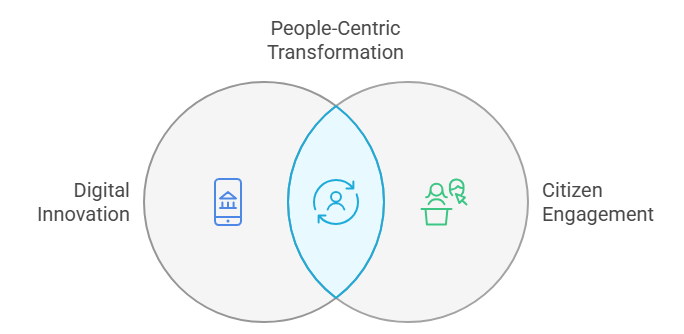
From a strategy perspective, prioritizing local government community engagement ensures that digital transformation is not just a technical upgrade but a people‑centric evolution.
Digital Service Improvements That Matter to Residents
For local governments, meaningful digital innovation begins by identifying services residents find difficult, slow, or inconvenient to access.
A municipality might introduce an online resident portal where people can submit service requests, pay utility bills, apply for permits, check application status, and receive updates without visiting government offices.
Similarly, digital permitting and licensing systems can reduce paperwork and give applicants greater visibility into review and approval processes. Mobile-friendly government websites, multilingual support, and accessible forms can further improve service access for residents with different needs.
The goal is not simply to move existing paperwork online. Effective digital services simplify the entire experience, reduce unnecessary steps, and provide clear information throughout the process.
5. Skilled Staff and Strong Partnerships
Capacity is the biggest bottleneck. In the Public Technology Institute’s 2024 survey, only 4% of local respondents said they were highly confident their tech teams could meet AI demands.
What to do:
- Train staff in basic data skills.
- Name an “innovation champion” in each department.
- Use outside partners to fill skill gaps without getting locked in. Ask vendors for open standards and clear exit terms.
6. Prioritizing Security, Compliance, and Public Trust
As digital systems become more integral to local government operations, robust security and compliance frameworks are critical. Citizens expect their data to be protected and rightly so. Cyber threats remain a top concern across public sector entities.
Security requirements apply not just to core systems, but to mobile and web platforms that support remote access, critical services, and workforce mobility. Implementing cyber security solutions for local government and strong state and local government mobile access management ensures data integrity, protects public trust, and mitigates risk exposure.
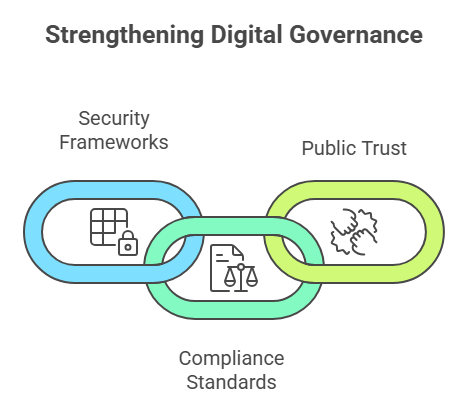
When security and compliance are integrated into innovation planning, local governments reinforce the legitimacy of their digital services and foster public confidence.
Real-World Examples of Innovation in U.S. Local Government
Across the United States, local governments are using digital technology to improve citizen engagement, simplify administrative processes, and make essential services more accessible. These examples demonstrate how municipalities can move from innovation planning to practical implementation.
1. Virginia Beach, Virginia: AI-Powered Citizen Assistance
The City of Virginia Beach launched Beach Bot in December 2025 to make information on its official website easier to find. Instead of navigating multiple department pages, residents can ask questions in conversational language and receive relevant information about city services, meetings, and programs.
The initiative demonstrates how AI-powered assistance can simplify access to public information while helping municipalities respond to common resident inquiries more efficiently.
Key takeaway: Cities can begin AI innovation with a focused, public-facing information service rather than a complex citywide transformation.
2. Austin, Texas: Modernizing the Government Digital Experience
The City of Austin invested in a Digital Experience Platform to improve how residents access information and services through its official website. The initiative emphasizes accessible design, more consistent digital experiences, and improved government content management.
Austin’s Digital Experience Platform was also recognized among the 2026 Government Experience Project Award winners.
Key takeaway: Modernizing a government website involves more than visual improvements. It requires better content organization, accessibility, and technology infrastructure to support resident needs.
3. Portland, Oregon: Responsible AI Innovation Through Collaboration
In 2026, the City of Portland organized a Civic Tech + AI Incubation Lab that brought together community members, technologists, and public-sector stakeholders to explore potential improvements to municipal services.
Participants considered challenges involving permitting, licensing, government information, and operational processes. The city also emphasized responsible AI practices, including transparency, human oversight, and protection of sensitive information.
Key takeaway: Local governments can encourage innovation by collaborating with communities and technology specialists while establishing clear safeguards before adopting new solutions.
What Other Municipalities Can Learn
These examples illustrate three practical approaches to local government innovation: simplifying resident interactions, modernizing digital infrastructure, and testing emerging technology responsibly.
Rather than adopting every new technology, cities and counties should identify a clear service problem, select an appropriate solution, test its effectiveness, and expand only after demonstrating public value.
Innovative Ideas for Local Governments to Improve Public Services
Local government innovation does not always require a large technology budget or complete infrastructure replacement. Many cities and counties can begin with smaller initiatives that solve common operational challenges.
Here are six innovative ideas for local government agencies to consider.
1. Introduce Digital 311 Service Requests
Provide residents with a centralized online system to report potholes, damaged streetlights, missed waste collections, and other municipal concerns. Automated routing and status notifications can improve transparency and reduce manual coordination.
2. Simplify Online Permitting and Licensing
Replace paper-based applications with digital workflows that allow residents and businesses to submit documents, make payments, schedule inspections, and monitor application progress.
3. Deploy an AI-Powered Government Information Assistant
Use an AI chatbot grounded in approved government information to answer common questions about office hours, public services, local regulations, and application requirements. Include clear escalation options when human assistance is needed.
4. Create a Unified Resident Service Portal
Bring frequently used municipal services into one digital platform so residents can access information and complete tasks without navigating multiple departmental websites.
5. Improve Decisions With Government Data Dashboards
Use analytics to monitor permit processing times, public works requests, service volumes, and other operational indicators. These dashboards can help department leaders identify bottlenecks and allocate resources more effectively.
6. Expand Digital Community Engagement
Introduce online surveys, virtual public meetings, multilingual feedback forms, and participatory platforms that make it easier for residents to contribute to municipal planning and policy discussions.
For smaller municipalities, the most effective starting point is often one high-demand service. A limited pilot with defined goals, a manageable budget, and clear performance measures can provide evidence for future investment.
The objective of innovation should always be to improve public outcomes, not merely increase the number of technologies a municipality uses.
How to Build a Local Government Digital Innovation Strategy
A successful local government digital strategy connects technology investments with measurable improvements in public services. Instead of adopting isolated solutions, municipalities should develop a practical roadmap based on operational priorities, available resources, and community needs.
Step 1: Assess Current Government Services
Review existing technology systems, resident service requests, departmental workflows, and service delivery challenges.
Identify processes affected by repetitive paperwork, outdated applications, disconnected databases, or lengthy response times.
Expected outcome: A prioritized list of operational problems and digital improvement opportunities.
Step 2: Define Goals and Prioritize Projects
Establish measurable objectives such as reducing permit processing time, improving online service availability, or increasing resident satisfaction.
Evaluate potential projects based on public impact, implementation complexity, security requirements, and available funding.
Expected outcome: An innovation roadmap with clear priorities, project owners, and success measures.
Step 3: Launch a Small Digital Innovation Pilot
Choose one manageable initiative, such as a 311 request platform, online permitting workflow, or AI-powered information assistant.
Conduct a limited rollout, train participating staff, and gather feedback from residents and government employees.
Expected outcome: A tested solution with documented costs, challenges, and initial performance results.
Step 4: Measure Results and Make Improvements
Compare pilot performance with the existing process using indicators such as processing time, service completion rates, operational costs, system adoption, and user satisfaction.
Review accessibility, cybersecurity, and data privacy requirements before expanding the solution.
Expected outcome: Evidence showing whether the initiative meets its objectives and is suitable for broader deployment.
Step 5: Expand Successful Solutions Across Departments
Extend effective technologies to additional services or departments where there is a clear operational benefit.
Support expansion through staff training, integration planning, governance policies, vendor management, and ongoing performance monitoring.
Expected outcome: A sustainable digital innovation program that supports continuous improvements in government service delivery.
By following a phased approach, local governments can reduce implementation risks, manage budgets more effectively, and demonstrate the practical value of digital innovation to public officials and residents.
How to Measure Innovation in Local Government
Successful local government innovation should produce measurable improvements in service delivery, operational efficiency, and resident experiences. Municipalities need clear performance indicators to determine whether technology investments are delivering meaningful public value.
The following key performance indicators can help cities and counties evaluate digital innovation initiatives.
| Performance indicator | What it measures |
|---|---|
| Service processing time | Average time required to complete permits, applications, or service requests |
| Digital service adoption | Percentage of eligible transactions completed through online channels |
| Resident satisfaction | Feedback on the accessibility, convenience, and quality of government services |
| Cost per transaction | Resources required to process an application, request, or payment |
| Staff productivity | Time spent on routine administrative work before and after modernization |
| Service accessibility | How effectively digital services support users with disabilities and different language needs |
| System reliability | Platform availability, incidents, and successful service completion |
For example, a city introducing an online permitting platform could compare average application processing times before and after implementation. A municipality deploying a digital 311 system could monitor request completion times, department response performance, and resident satisfaction.
Government agencies should establish baseline measurements before launching new technologies, review results regularly, and use the findings to improve services.
Measuring innovation through public outcomes helps municipal leaders justify investments, identify unsuccessful approaches early, and build accountability into long-term digital transformation strategies.
Common Barriers to Local Government Innovation and How to Overcome Them
Although digital innovation offers significant opportunities, many U.S. municipalities face financial, technical, and organizational challenges that can delay modernization.
Limited Budgets and Funding
Small municipalities may struggle to allocate funding for new software, infrastructure, and specialized technical resources.
Recommended approach: Prioritize projects with clearly defined outcomes, begin with manageable pilots, and evaluate available grants, shared purchasing arrangements, or phased implementation options.
Legacy Technology and Disconnected Systems
Outdated applications and databases can prevent departments from sharing information efficiently and make modernization more complicated.
Recommended approach: Assess integration requirements, introduce interoperable platforms where feasible, and modernize critical systems gradually rather than replacing everything simultaneously.
Workforce Skills and Resistance to Change
Employees may lack experience with emerging technologies or feel uncertain about changes to established government processes.
Recommended approach: Provide role-specific training, involve staff in planning, establish departmental innovation champions, and explain how new systems support daily responsibilities.
Cybersecurity and Data Privacy Concerns
Modern government platforms must protect sensitive information while maintaining reliable public services.
Recommended approach: Include security assessments, access controls, vendor due diligence, privacy reviews, and incident response planning from the beginning of each project.
Complex Procurement and Approval Processes
Technology initiatives can face extended procurement timelines, budget approvals, and contractual requirements.
Recommended approach: Define project requirements early, engage procurement teams during planning, evaluate approved purchasing vehicles where available, and establish realistic implementation milestones.
Addressing these barriers through structured planning and collaboration helps local governments introduce new technologies responsibly while maintaining operational continuity and public trust.
Conclusion: Moving From Aspiration to Impact
Modernize Local Government Services With App Maisters Government
App Maisters Government supports government agencies with custom application development, digital resident portals, AI-powered citizen engagement solutions, cloud modernization, and secure technology integration. Our team helps public-sector organizations plan and implement digital solutions aligned with their operational goals, technology requirements, and service delivery priorities.
Explore our government technology solutions to identify practical opportunities for your agency’s next innovation initiative.
Innovation in local government is not defined by how many new technologies a city or county adopts. Its success depends on how effectively those technologies improve public services, strengthen government operations, and address community needs.
The six key elements of local government innovation provide a practical foundation for progress. By combining strategic leadership, modern digital infrastructure, responsible AI adoption, accessible resident services, workforce development, and strong cybersecurity practices, municipalities can build sustainable digital transformation programs.
For U.S. cities and counties, the most effective approach is to start with a clearly defined challenge, implement an appropriate solution, measure results, and expand successful initiatives over time.
Frequently Asked Questions
What is innovation in local government?
Innovation in local government involves introducing better processes, technology, and service delivery methods to improve how cities and counties operate. Examples include digital permitting, AI-powered citizen assistance, online resident portals, data analytics, and automated service requests.
What are the six key elements of local government innovation?
The six key elements are strategic leadership, modern digital infrastructure, responsible AI and data use, accessible digital services, skilled employees and partnerships, and cybersecurity and public trust. Together, they support sustainable improvements in municipal operations.
What are examples of innovation in local government in the United States?
Examples include Virginia Beach’s AI-powered Beach Bot, Austin’s Digital Experience Platform, and Portland’s Civic Tech + AI Incubation Lab. These initiatives demonstrate how U.S. municipalities are exploring better information access, government website modernization, and responsible AI adoption.
Why is technology important in local government?
Technology helps local governments streamline administrative processes, improve access to public services, reduce repetitive manual tasks, strengthen communication, and support data-driven decisions. Well-designed digital platforms can also improve service accessibility and transparency.
How can small municipalities innovate with limited budgets?
Small municipalities can begin by identifying one high-priority service problem and introducing a limited pilot. Projects such as online forms, digital service requests, or website improvements may offer manageable starting points. Tracking costs and measurable outcomes helps determine whether further investment is justified.
What is a local government digital innovation strategy?
A local government digital innovation strategy is a structured plan for using technology, data, and process improvements to achieve municipal goals. It typically includes assessing existing services, defining priorities, implementing pilot projects, measuring performance, and expanding successful solutions.
How can AI improve local government operations?
AI can support government operations through citizen information assistants, document processing, service request categorization, translation support, and data analysis. Agencies should implement appropriate privacy protections, monitor accuracy, and retain human oversight over consequential decisions.
How can local governments measure the success of digital innovation?
Local governments can measure innovation through service processing times, online service adoption, resident satisfaction, transaction costs, staff productivity, accessibility, and system reliability. Comparing results against established baselines helps determine whether an initiative produces meaningful improvements.