
Top 5 Government Technology Trends to Adopt Now
Local governments face growing pressure to innovate. Citizen expectations are soaring while budgets tighten. Yet modern technology offers powerful solutions. From cloud migration to AI-driven services, digital transformation can help agencies work faster, save money, and improve service. Below are five must-adopt tech trends for public-sector leaders. Each trend includes real-world examples and data to show why these changes matter now.
1. Cloud Migration and Modernization
More government agencies are moving their systems to the cloud. Why? Cloud platforms reduce costs, enhance flexibility, and improve security.
- Scalability & Collaboration: In the cloud, workloads can quickly scale to meet demand. Agencies report that cloud tools improve remote and hybrid work by allowing staff to collaborate on shared documents and applications from anywhere.
- Cost Efficiency: Shifting to the cloud means no more costly servers and physical infrastructure. It also cuts down on IT maintenance costs.
- Security & Resilience: Leading cloud providers offer strong data encryption and built in backups. Digital document management means all files… are uploaded to the cloud where any authorized worker can retrieve it with just a click, and cloud servers automatically protect your data against disasters and hackers.
At App Maisters, our government services team specializes in cloud technology for public sector use, supporting secure, scalable cloud migration tailored to the needs of agencies. Moving to the cloud lays the foundation for more efficient, digital-first operations offering the agility, cost savings, and security modern governments demand.
2. Citizen-Centric Digital Services
Residents now expect government services to feel as seamless as online shopping they want to apply for permits, pay fees, or report issues anytime, anywhere with just a few taps on their device.
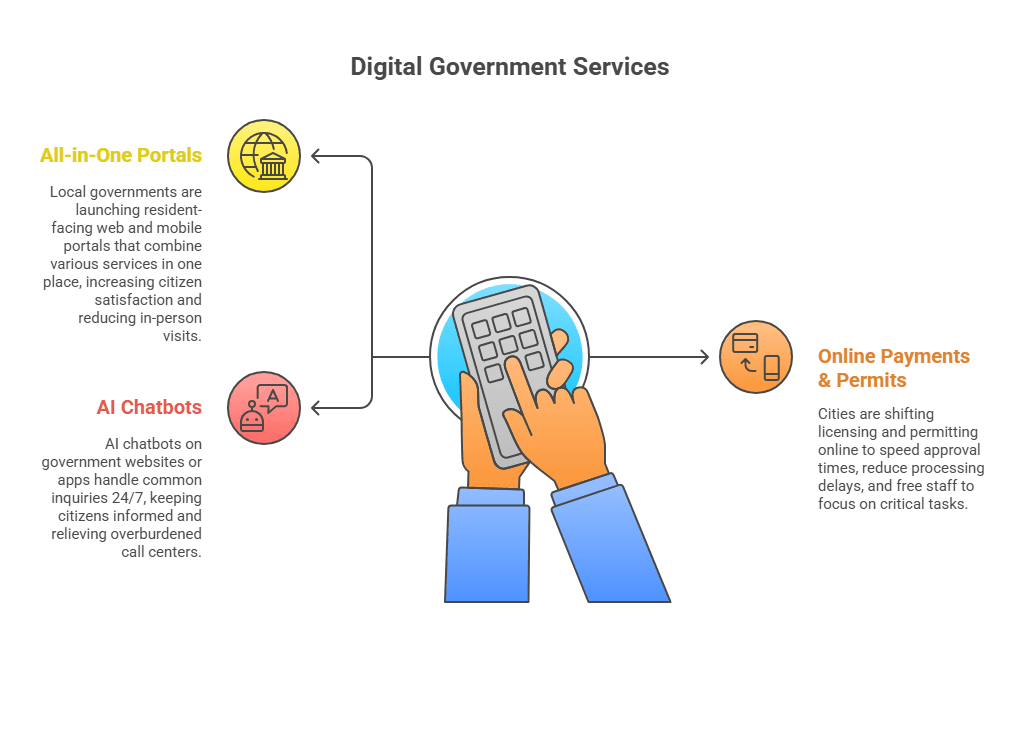
All-in-One Portals: Local governments are launching resident-facing web and mobile portals that combine payments, permits, service requests, and updates all in one place. For example, we helped one county build a Resident Portal App that lets users report issues, submit permits, and track progress in real time. The result? Higher satisfaction and fewer in-person visits.
Online Payments & Permits: Cities are shifting licensing and permitting online to speed approval times. Studies show digital permit systems dramatically cut processing delays. By removing paper forms, localities free staff to focus on critical tasks. Online payment integration adds revenue efficiency: citizens pay fees digitally and funds post immediately.
AI Chatbots: AI chatbots on government websites or apps can handle common inquiries 24/7. In Phoenix, AZ, the city’s “myPHX311” virtual assistant built on AWS Lex uses natural language to answer questions in English and Spanish about services and bill payments. In Williamsburg, VA, an AI chatbot answered 79% of resident questions on first contact, dramatically reducing the human workload. These AI assistants keep citizens informed and relieve overburdened call centers. A focus on digital service delivery boosts engagement and efficiency. True digital government workflows increase speed, accuracy, and transparency. When citizens can apply online for permits, check license statuses, and communicate via mobile tools, governments operate more smoothly and constituents stay happier.
3. Data-Driven Decision Making
Data is a powerful government asset if it’s shared and analyzed effectively. The trend of data sharing as a program is surging. Instead of isolated databases, agencies are building data platforms for cross-department use. This breaks down silos and lets leaders spot trends faster. For example, if planning, police, and health departments share info, officials can proactively address public safety or infrastructure issues.
Predictive Analytics: Governments are increasingly turning to AI-powered analytics tools that blend current and historical data to predict critical needs. For example, systems monitor infrastructure usage and automatically flag roads that may soon need repairs. These cloud-based analytics also analyze spending patterns to anticipate budget trends and evaluate emergency service demands. By revealing hidden correlations and forecasting future challenges, agencies can make smarter, proactive decisions saving time, money, and improving public outcomes.
Integrated Platforms: Data-driven government relies on integration. Governments are adopting unified software suites so that codes, permits, citizen requests and GIS all feed into a single platform. This integration means a single record can update across departments.
Cross-Department Sharing:When planning, health, and public safety departments can share information, leaders make smarter, faster decisions. Integrated systems make it easier to track, measure, and respond to needs across departments. App Maisters helps agencies set up secure data platforms that enable clear reporting and smarter strategy.
4. AI and Intelligent Automation
Artificial intelligence (AI) and Robotic Process Automation (RPA) are reshaping public sector work. These tools handle routine tasks and unlock creativity for staff.
AI-Powered Chatbots: As noted, modern chatbots use AI to understand freeform questions. They can do more than FAQ answers some can accept applications, check permit status, or even process payments. Singapore’s OneService chatbot (accessible via WhatsApp/Telegram) lets citizens report street issues or illegal dumping, routing reports to the right agency. Advanced AI agents can even analyze resident feedback to inform strategy.
Process Automation: RPA uses bots to mimic human data entry. RPA allows government agencies to effectively dedicate their more menial tasks to programs that automatically follow commands. For example, a robot might ingest daily permit applications from emails into a database, freeing staff from repetitive data entry. Deploying RPA has yielded huge time savings: one municipality reported that workflow bots slashed processing hours dramatically, giving employees back their day.
Advanced Analytics: Beyond chatbots, AI tools help analyze large data sets. Predictive analytics can flag maintenance issues before they happen or optimize traffic flow. Natural Language Processing (NLP) helps parse citizen comments and social media. The result is faster, more informed action. Agencies that use automation report faster response times, fewer errors, and happier staff. It’s not about replacing humans it’s about letting them focus on what matters.
5. Integrated, Secure Infrastructure
The final trend is making all these systems work together securely. Governments cannot afford scattered apps and weak defenses. Modernizing means unifying systems on a resilient, protected platform.
- Cybersecurity Best Practices: At the same time, agencies must fortify their digital defenses. Cyber attacks on government are rising sharply. In 2023, the FBI reported that state and local governments were the third most-targeted sector for ransomware, with average ransoms exceeding $1 million. Officials now say robust cybersecurity is non-negotiable. Best practices include multi-factor authentication, regular patching, and continuous monitoring. As one expert blog notes, a vital aspect of government digital transformation involves implementing robust cybersecurity measures to safeguard sensitive data.
- Cloud-Based Security: Moving to cloud infrastructure also boosts security, since major providers invest heavily in protection. With digital documents stored in the cloud, governments no longer need costly vaults or specialized staff to guard files. Instead, secure servers handle backups and encryption.
- Unified Platforms: Instead of juggling multiple disconnected tools, governments are adopting platforms where departments share data and workflows in real time. One example? Multi-agency portals now allow citizens to log in once to access permits, pay taxes, or check code enforcement status. Behind the scenes, different departments see the same, real-time information streamlining service and strengthening cybersecurity.
Conclusion:
Frequently Asked Questions
What are the current government technology trends?
Top trends include data sharing, cloud migration, digital services, AI tools, and integrated systems. These help governments improve speed, efficiency, and citizen experience.
What does government digital transformation mean?
It means modernizing government operations using digital tools like cloud systems, automation, and mobile apps to serve citizens faster and smarter.
Why is digital transformation important for public agencies?
It boosts service speed, reduces paperwork, lowers costs, and improves citizen satisfaction. Digital tools also support remote work and better planning.
How does cloud technology benefit the public sector?
Cloud technology for public sector agencies improves flexibility, security, and scalability allowing services to run anytime, anywhere with lower IT costs.
How are governments using AI?
Governments use AI for chatbots, automating forms, data analysis, and improving emergency response. It saves time and helps serve citizens 24/7.
Why is system integration important?
Connected systems reduce manual work, avoid data duplication, and allow departments to collaborate better for faster service and smarter decisions.
What are key cybersecurity concerns in government?
Data breaches, outdated systems, and lack of cyber staff. Agencies now focus on secure cloud, employee training, and threat monitoring to stay protected.
How can tech improve citizen engagement?
Online portals, chatbots, and mobile apps let citizens access services easily, report issues, and track requests in real time building trust.
What services does App Maisters Government Services offer?
App Maisters provides cloud migration, AI development, mobile app design, system integration, and cybersecurity tailored for government agencies.
What’s the difference between digital and traditional government?
Digital government delivers services online, not in-person. It’s faster, more transparent, and cost-effective giving citizens access anytime, from anywhere.