
How Mobile Apps Can Reduce Queues at Public Offices
Government offices often face long, frustrating queues. People stand in crowded waiting rooms for everything from permit renewals to passport applications. Mobile apps for government offer a solution. Citizens can book appointments or join virtual lines from their smartphones. This means waiting at home or in the car instead of on a hard bench. No more “take a number and wait” you get a ticket on your phone.
In peak hours, even high-street shops see long queues just like government counters. But a clever app can change that. Citizens can use a simple government mobile app to schedule visits or check queue status, cutting overcrowding and speeding up service. For example, Singapore’s immigration agency allowed online appointment bookings and reduced average waits by about 30%. People get real-time updates on their wait times, plus SMS or push alerts. Studies show this streamlines service and boosts citizen satisfaction.
Key Benefits of Scheduling Apps
- Skip the line: Book appointments any time, from anywhere. No more standing physically in a queue.
- Real-time updates: The app tells you your place in line and estimated wait. This transparency cuts uncertainty.
- Flexibility: You can reschedule or cancel on the go. App-based scheduling means you stay in control of your time.
- Staff efficiency: Clerks focus on helping people, not managing lines. Automated scheduling lets staff prioritise tasks and speed up processing.
Virtual Queuing in Practice
Even when a line forms, mobile tech makes it painless. Picture two neighbours happily checking a city app on their phones. They don’t worry about the queue the app handles it. Features like real-time chat or support in multiple languages make these apps easy for all users. Of course, security is vital. One survey found 93% of organisations felt confident in mobile security, yet 62% had actually faced breaches. This shows strong application security for public sector is a must to protect personal data behind every digital ticket.
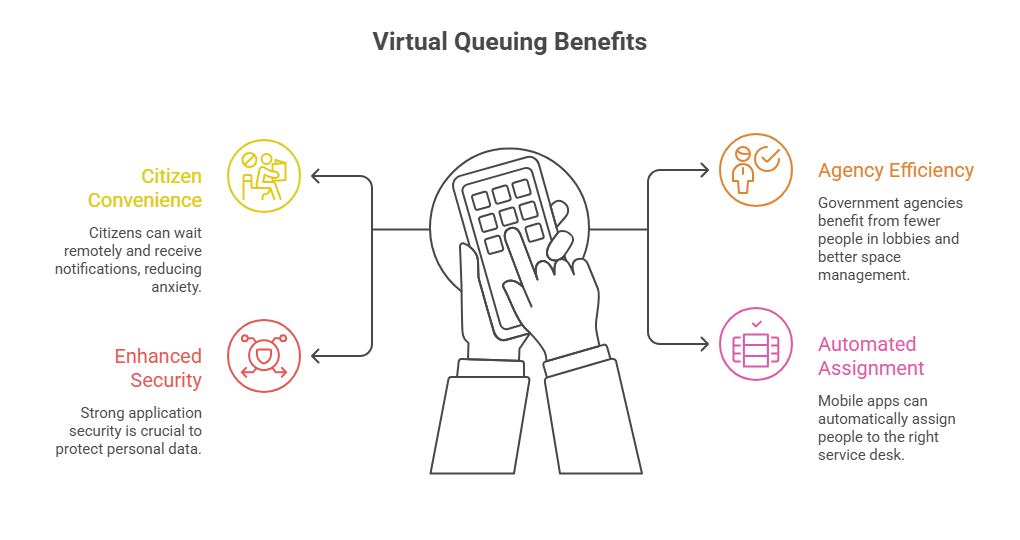
Citizens simply tap to “take a ticket” via an app or web portal. They then wait remotely until notified by SMS or push message. Cloud-based queuing systems have the software behind the scenes to track every person’s turn. Government agencies see the benefits: fewer people crammed in lobbies, better space management, and calmer offices. For example, mobile queue apps can automatically assign people to the right service desk based on their needs, speeding up overall flow. Meanwhile, citizens appreciate knowing their spot one New York City program even texts housing applicants about their queue position, cutting anxiety and building trust.
Global Examples and Data
- Singapore: Hospitals and immigration centres now use digital kiosks and apps. One AI-based system slashed average wait times by roughly 30%.
- United Arab Emirates: Government offices implemented online ticketing and SMS alerts. Citizen satisfaction with service jumped about 15% thanks to virtual queuing.
- New York City (USA): The housing authority’s virtual queue system sends text updates to people waiting, greatly reducing uncertainty.
- United Kingdom: Many local councils adopted online scheduling during peak periods, leading to smoother visitor flow and more organised office environments.
These stats and stories show the power of mobile queues. In one U.S. city, launching a mobile services app drove citizen satisfaction up 72%. Globally, data from vendors and governments confirm: shifting to mobile queues cuts wait times, reduces no-shows, and makes services more efficient.
Features of Effective Apps
- On-the-go citizen services: Modern apps bundle tasks into one place. They deliver citizen services for the smartphone age, so people can report issues, pay bills or apply for permits right from their phone.
- Government mobile app services: Many agencies list dozens of dedicated mobile government app services. Whether renewing a licence or checking tax payments, citizens use apps instead of queues.
- 24/7 booking: Always-on scheduling means you never have to call during office hours. You can book or adjust appointments whenever it suits.
- Multichannel support: These apps tie into kiosks and websites too. A citizen without a smartphone can still sign in at a kiosk or by phone, and the system keeps everyone in one queue line.
- Notifications: SMS or push alerts keep users informed. For example, NYC’s housing authority texts queued citizens their next steps, reducing frustration.
- Two-way communication: Many apps include chat features or feedback forms. Citizens report problems and officials reply directly, turning a one-way counter visit into ongoing engagement.
- Security & privacy: Strong data protection is built in. Government app platforms use encryption and multi-factor login. Agencies adhere to application security for public sector standards to guard sensitive information.
Trends and Future Outlook
Mobile queueing is part of a bigger shift to digital government. By 2026, many agencies treat apps as core to their strategy. App Maisters notes that some counties now offer all-in-one citizen portals (permits, payments, service requests) in a single app. These platforms even use AI to predict peak times or detect common issues in advance. Governments embracing these trends see faster responses, lower costs and happier citizens. In fact, one city reported a 72% jump in approval after launching a modern service app.
Field workers benefit too. Many agencies now evaluate the best mobile apps for government field workers 2025 or 2026 to streamline inspections and maintenance. For example, a council might use an app to route maintenance crews in real-time based on citizen reports. Meanwhile, social media and citizen engagement apps blur the line between government and public apps now include built-in feedback surveys and alert systems.
Overall, the combination of mobile, cloud and data analytics is making public service smarter. Authorities can notify people of emergencies or changes, and even allow contactless check-ins via QR codes. As one tech report warns, complacency is risky if agencies skip solid security or training, apps fail. But with the right strategy, mobile solutions drive government into the smartphone era of instant service.
Conclusion
Mobile innovation is transforming public service. Well-designed government mobile apps turn frustrating lines into quick digital check-ins. Citizens use citizen engagement apps to interact, report issues and stay informed on the go. Every new government app from scheduling portals to 311 request apps brings people faster answers and fewer waits. In the digital age, smartphone based citizen services are no longer optional; they’re expected. Embracing these tools shows that public offices value people’s time. By making services available on phones, governments send a clear message: we’re modern, responsive, and ready for the smartphone generation.
Frequently Asked Questions
How can mobile apps reduce queues in public offices?
Mobile apps allow citizens to book appointments, submit forms, and track requests online. This reduces walk-in visitors and spreads appointments throughout the day. As a result, offices become less crowded and services move faster.
Why are mobile apps for government becoming important today?
Governments want to deliver faster and more convenient services. Mobile apps for government help citizens access services anytime without standing in long lines. They also improve efficiency for public staff.
What services can citizens access through government mobile apps?
Many services can move to mobile platforms. These include license renewals, permit applications, tax payments, service requests, and document submissions. This shift supports modern citizen services for the smartphone age.
How do citizen engagement apps improve public services?
Citizen engagement apps allow residents to communicate directly with government agencies. People can report issues, track service updates, and receive notifications. This improves transparency and builds trust between citizens and local authorities.
Can mobile apps replace visits to government offices completely?
Not always. Some services still require identity verification or document checks in person. However, mobile apps for government reduce the number of visits by allowing citizens to complete most steps online before arriving.
Are government mobile apps secure for citizen data?
Yes, security is a key priority. Modern platforms include strong encryption, identity verification, and strict compliance policies. Many agencies also implement application security for public sector standards to protect sensitive data.
What role do citizen engagement apps play in smart cities?
Agencies usually begin with a digital service strategy and identify high-demand services to move online. Partnering with experienced providers like App Maisters helps governments design secure and scalable mobile apps for digital government.