
Optimizing Government Websites with AI: Enhancing Citizen Engagement
Government agencies are transforming static web portals into dynamic, user-centric hubs with government website optimization powered by AI. By integrating artificial intelligence, agencies can vastly improve search, navigation, and personalization on their sites. For example, GenAI chatbots and virtual assistants can instantly understand user queries, reducing search times and delivering more relevant information. Such AI-driven government website optimization makes it easier for citizens to find services and data, turning each interaction into a smooth, engaging experience. In fact, IBM finds that 66% of government agencies are already piloting citizen-facing automation (the highest AI adoption rate), underscoring the demand for smarter digital services.
AI-Driven Personalization and Accessibility
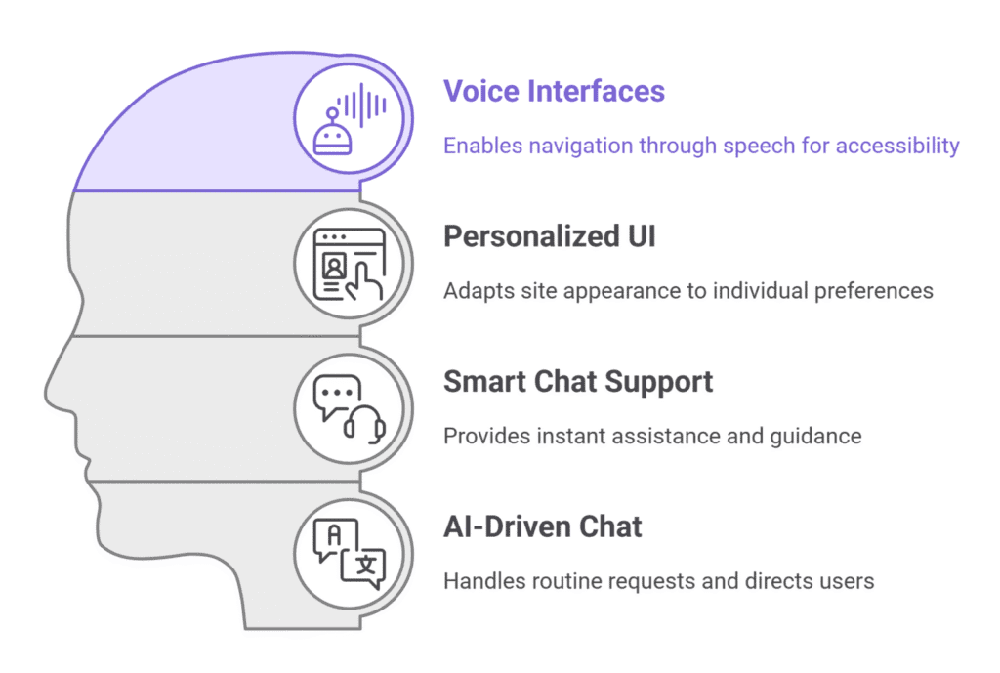
Personalized interfaces and accessibility features are central to AI–optimized sites. Smart websites can adapt layouts, text size and color contrast to match each user’s needs. Voice–activated navigation lets people control menus by speech, helping users with visual impairments or motor challenges. Crucially, AI chatbots and virtual assistants provide 24/7 support: they answer FAQs, guide users through forms, and even handle complex procedures in real time. This always–on help keeps citizens on–site longer and builds trust by reducing frustration. AI tools can also translate content or generate real–time captions, so accessible government websites serve residents of all languages and abilities. In short, AI makes the user experience smoother and more inclusive, turning portals into friendly digital assistants for every resident.
Smart Chatbots and Virtual Assistants
Conversational AI is revolutionizing citizen support. Public sector chatbot software can field routine questions (service locations, permit status, etc.) round-the-clock, freeing staff to tackle complex cases. These bots use natural language processing and even voice-to-text to understand inquiries in plain language. They can escalate urgent issues to human operators, ensuring seamless care. Proven examples include USA.gov’s SAM chatbot, which answered repetitive citizen queries and cut call-center workloads. The U.S. Army’s web portals also saw faster, more accurate results by adding AI-driven search and chat features. In essence, AI assistants act as co-pilots on government websites: they guide users to the right content, answer questions instantly, and keep digital services available any time dramatically boosting citizen engagement.
Automated Content Management and Updates
Modern Content Management Solutions now leverage AI to keep government websites current and compliant. AI-driven CMS tools can automatically update event calendars, news, permit information and other data in real time. This fixes a common issue: over 50% of public agencies still use slow manual processes to post updates, leading to outdated info. With automation, every press release or emergency alert goes live immediately. AI also monitors content health flagging broken links, missing metadata, or duplicate pages for review. For instance, intelligent systems can suggest topic tags and alert managers about old documents that need removal. This keeps the site organized and searchable. In practical terms, automating content workflows means citizens always see fresh, accurate information and agencies stay compliant with accessibility or security standards.
Enhanced Search and Navigation
An optimized search function is a game–changer. Many government sites are huge (like the Army’s MWR portal with thousands of pages), so plain keyword search often fails. AI can transform search by recognizing intent, ranking results by relevance, and filtering by context. For example, when the U.S. Army added AI–enhanced search, user satisfaction jumped because people found installation–specific programs and services faster. AI can also supply “smart suggestions” or auto–complete questions, speeding up navigation. Additionally, AI for government websites can generate on–the–fly summaries of long policy documents or FAQs, so citizens get quick answers without wading through dense text. In short, AI makes it simple for visitors to jump directly to the information they need, improving both efficiency and engagement.
Real-World Success Stories
Several projects showcase the impact of AI on citizen engagement. In one case, a U.S. city with a 24% non-English speaking population implemented a multilingual GenAI assistant on its website. This “Ask Gov” bot ingested thousands of city documents to answer resident queries via voice and text in multiple languages. The result: immediate answers from over 2,500 webpages, greatly improved accessibility, and stronger citizen engagement. Citizens could now use the site without language barriers, cutting down on frustrating call-center hold times. In another example, the state and local governments using AI-based chat and search saw sharp rises in site usage and positive feedback. By focusing on high-impact services (like permit applications or emergency updates), these agencies delivered tangible improvements in user satisfaction. Such successes illustrate that AI solutions for government agencies do not just sound good in theory they measurably boost public trust and usage of online services.
Best Practices for AI-Powered Websites
For agencies embarking on AI–driven website optimization, a strategic, step–by–step approach works best. Experts recommend starting small with pilot projects perhaps adding an AI chatbot on one page or running an automated accessibility audit. Use human–centered design: study how different users navigate your site, test AI features with real citizens, and refine the tools iteratively. It’s also critical to embed governance and transparency. Build AI models with clear rules for privacy and security (e.g. avoid retaining sensitive data). Train staff to oversee AI outputs and handle exceptions. Partner with knowledgeable vendors especially those experienced in government web and mobile development so the technology aligns with compliance standards and citizen needs.
Throughout, measure success by both usage metrics and user feedback: track questions answered, tasks completed on site, and citizen satisfaction scores. When implemented responsibly, AI tools on government websites foster continuous improvement. Agencies that follow this path can set a high bar creating accessible government websites and digital services that truly meet constituent needs.
The Future of Digital Government
The move toward AI-driven websites is part of a broader public sector digital transformation. Forward-looking municipalities and agencies are treating their web portals as service hubs, not just information pages. As AI capabilities advance, future sites will likely offer even more personalized experiences (for example, proactively notifying residents of services they qualify for) and seamless handoffs between online self-service and human help. Citizens expect these innovations: when online services are easy to use and inclusive, trust in government grows. By embracing AI solutions such as machine-learning chatbots, predictive content engines, and automated compliance checks today, governments ensure their websites are future-ready. In the years ahead, optimized, AI-powered sites will make government more agile and engaging truly bringing public services into the digital age.
Frequently Asked Questions
What is government website optimization?
Government website optimization means improving a government site’s performance, usability and relevance often using AI tools. This can include faster searches, clearer content, mobile-friendly design and accessible features so citizens can find information and services more easily.
How does AI improve government websites?
AI enhances government websites by enabling features like intelligent chatbots, personalized content, and advanced search. For example, an AI chatbot can answer routine questions 24/7, while personalization engines adjust the UI for each user. These tools make sites more responsive and engaging for citizens.
What is a content management solution for government websites?
A content management solution (CMS) is software that helps agencies create and publish web content. Modern CMS platforms often include automation and AI features so updates (news, permits, alerts) go live instantly. They also aid compliance (e.g. tagging content or detecting broken links) to keep the site organized and accessible.
Why are accessible government websites important?
Accessible websites ensure all residents including people with disabilities or different languages can use online services. Accessible features (like voice navigation or automatic captions) make government information reachable to everyone. This inclusive design is both legally required and key to equitable citizen engagement.
What is public sector chatbot software?
Public sector chatbot software is an AI tool designed for government use. It can handle citizen queries in natural language, providing instant answers from official data. These chatbots relieve call centers by answering common questions (e.g. “How do I pay a parking ticket?”) around the clock, improving service without extra staff.
How does AI increase citizen engagement on government websites?
AI boosts citizen engagement by making websites more helpful and user-friendly. Chatbots and assistants provide instant support, personalized content keeps users interested, and AI-driven feedback tools let residents voice opinions easily. Altogether, these features make people more likely to use online services and trust their government’s digital channels.