



Local governments are under pressure to do more with less. Citizens expect online services and fast responses, but tight budgets and outdated systems make that hard. Robotic Process Automation (RPA) in local government is emerging as a powerful solution: it uses software robots to automate routine, repetitive tasks. In practice this means bots can fill out forms, process permit applications, update records, and more all without human fatigue or error. In fact, one recent blog notes that RPA has the power to eliminate thousands of man hours a year of manual data entry, and reduce your municipality’s expenses drastically. This shift to public sector automation is ushering in a new era of efficient service delivery.
What is RPA? At its core, RPA is like a virtual clerk that works inside your computer systems. The bots click, type, copy, and extract data exactly as a person would, except much faster and without breaks. For example, an RPA bot can log into a licensing portal, grab the data from a submitted form, enter it into the city’s database, and send an email confirmation all automatically. Because the bot follows strict rules, every step is consistent and auditable.
Local leaders have realized that RPA can make cumbersome workflows almost invisible. Instead of chasing paper or juggling spreadsheets, clerks get bots that do the grunt work. The result: clerks focus on citizen interaction, policy analysis or complex problem-solving not redundant paperwork. This shift from manual to automated processes is part of a broader digital transformation for local government. By combining RPA with modern content management system solutions and even cloud computing in public sector infrastructures, municipalities can build a resilient, future-ready IT environment. Bots handle the routine, while humans handle the strategy.
In the post-pandemic era, local governments face two big challenges: a talent shortage and soaring demand for digital services. Many cities struggle to fill vacancies under tight payroll budgets. At the same time, residents expect 24/7 online access for paying bills, tracking permits, or finding records much like they do with private companies. Rather than hiring new staff, governments are turning to RPA for public sector automation. As one state IT expert put it, RPA provides an opportunity to eliminate simple but time-consuming tasks, freeing up employees to tackle bigger problems. In short, RPA lets cities do more with the team they already have.
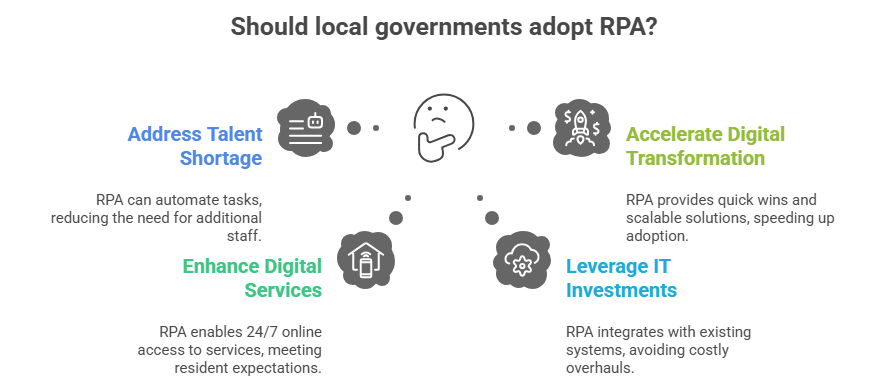
RPA also leverages today’s IT investments. Many municipalities have moved data and applications to cloud platforms and use content management system solutions to store documents. RPA tools easily integrate with these digital systems. A city can install a bot on its existing software even legacy systems and watch the automation run 24/7. In fact, RPA often complements cloud computing in public sector efforts: approvals and permits can be captured digitally and stored in the cloud for transparency. This means local governments can automate workflows without ripping out legacy software the bots simply “plug in” to what’s already there.
Additionally, RPA gives both internal IT teams and government IT contractors a fresh toolkit. Instead of writing custom code for every small process, tech leaders can deploy pre-built RPA robots for common tasks like invoice processing or data migration. This approach accelerates the digital transformation journey and lowers costs. Agencies can go from planning to results much faster, because RPA projects often show quick wins. In practice, governments launch a pilot bot, measure the results, then scale to more departments a practical marketing-funnel approach to technology adoption.
Local governments considering RPA should weigh its major advantages. Here are some of the standout benefits of RPA automation in the public sector:
Figure: A paperless local government is within reach when routine forms and approvals are fully automated. As illustrates, RPA can replace endless paperwork with digital workflows.
Is RPA just theory, or does it deliver in practice? Many governments report real success:
These examples show RPA’s versatility: licensing, courts, permits, registrations no matter the department, bots can streamline the routine. Across these stories, the recurring theme is clear: rpa automation benefits include faster processing, fewer errors, and more satisfied users.
Getting RPA off the ground takes planning. Here are some best practices for government technology leaders:
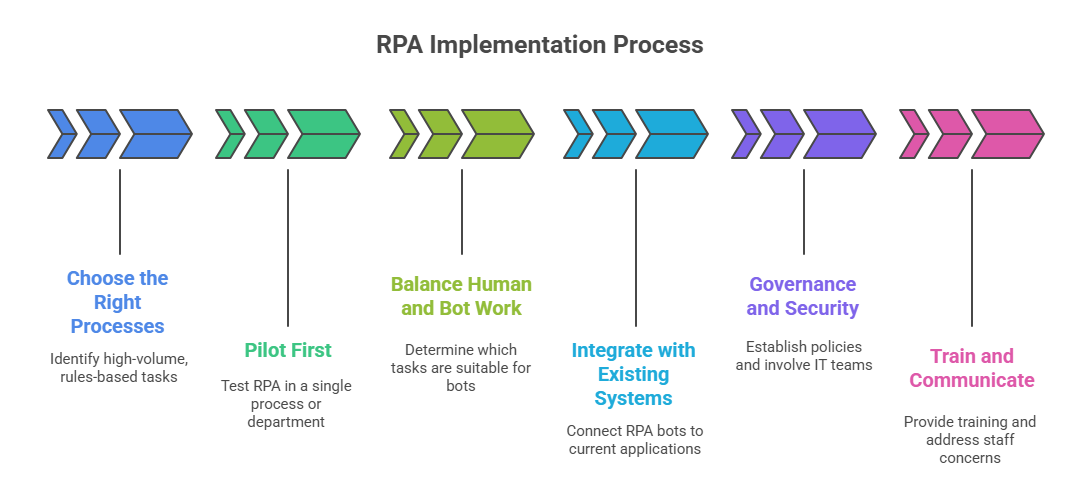
Following these steps helps ensure RPA moves from pilot to an integral part of government operations. Over time, a mature RPA program aligns with other digital initiatives, from cloud migration to data analytics.
RPA today focuses on routine rules. Looking ahead, it becomes a stepping stone to smarter automation. Future systems will blend RPA with AI what Gartner calls hyperautomation. For example, a bot might use optical character recognition (OCR) to read a handwritten form and then make decisions, or natural language processing to summarize citizen feedback. This is where concepts like agentic AI in public sector appear AI that can act on its own initiative.
Indeed, analysts predict widespread adoption. Gartner reported that 75% of governments will launch multiple hyper automation projects. The idea: give the machines more autonomy, but with human oversight. Imagine an agentic AI that hears about a pothole report on social media, confirms the address, and dispatches work orders through RPA workflows. In this vision, RPA is just one building block of a smarter, more proactive government.
For now, even without full AI, RPA brings real benefit. Agencies can already use OCR to digitize paper records, or machine learning to classify invoices. As these capabilities mature, RPA bots will handle ever-more complex tasks. But every step toward that future from today’s digital permit systems to tomorrow’s predictive services is built on the foundation of automating the basics now.
Robotic Process Automation is proving transformative for local governments. By automating routine tasks, RPA frees up staff, cuts costs, and helps agencies operate more transparently. From an 80% time savings on a single task to thousands of hours reclaimed across departments, the evidence is clear: rpa in local government delivers real ROI. For technology leaders, this means a new tool to include in the arsenal.
If you’re ready to explore RPA, start small with a clear pilot and measure the results. Collaborate with your IT team or trusted vendors who understand the public sector. Ask how RPA can integrate with your existing systems whether it’s financial software or cloud databases and plan your rollout carefully. With the right approach, RPA can be the spark that ignites a broader digital transformation for local government.
Call to Action: Ready to make your city more efficient? Reach out to experts in public sector automation to discuss RPA pilots and see how your agency can benefit. Start the conversation today and take the first step toward a smarter, more citizen-focused government.